Stored Grain & Godown Pest Control in Rajasthan
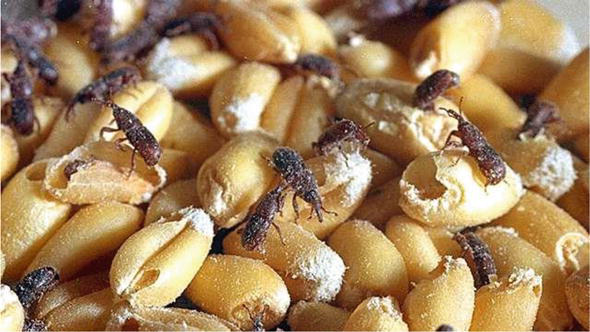
Stored product pests cause enormous losses in Indian warehousing — and most of that loss is invisible until the bag is opened. Rice weevils, lesser grain borers, khapra beetles, red flour beetles, pulse beetles and Indian meal moths develop inside the kernel or deep within the stack, feeding, breeding and contaminating grain with webbing, frass, cast skins and live insects. The damage is not just quantitative: infested stock is downgraded, rejected at inspection, and in export consignments it can mean the entire container is refused.
NPMS provides a complete stored grain pest management programme for godowns, cold stores, flour mills, spice units, dal mills, seed warehouses and FCI-type storage. It combines pre-storage hygiene and structural spraying of empty premises, prophylactic surface treatment of filled stacks, controlled phosphine fumigation under gas-proof sheets where required, and ongoing monitoring using pheromone traps so infestations are detected before they spread through the warehouse.
Signs of Stored Product Pest Infestation
- Live insects, beetles or moths crawling on bags, stacks, walls or in floor sweepings
- Webbing, clumping or matted grain on the surface of bags and in corners of the stack
- Fine powder, frass or cast skins collecting beneath bags and on the godown floor
- Hollow, holed or lightweight kernels and a musty odour from stored stock
- Rising moth activity around lights and windows inside the warehouse in the evening
Our Stored Grain Pest Management Programme
-
1
Warehouse inspection & stock assessment
We survey the godown structure, cracks, pallets, stacking pattern, ventilation, moisture levels and existing stock to identify infestation sources and assess risk before treatment.
-
2
Pre-storage structural treatment
Empty godowns are cleaned and treated with a residual spray on walls, floors, pillars, crevices and dunnage to eliminate carryover populations before new stock arrives.
-
3
Prophylactic stack spraying
Filled bag stacks receive approved surface treatment to protect against fresh infestation from adults entering the stack, using dosage rates appropriate for the commodity.
-
4
Fumigation & ongoing monitoring
Where infestation is established, controlled fumigation is carried out under gas-proof sheeting with strict exposure, safety and aeration protocol, followed by pheromone trap monitoring and periodic inspection reports.
Why NPMS for Stored Grain Pest Control
Fumigation is a licensed, high-responsibility activity, and both under-dosing and unsafe handling carry serious consequences. NPMS operates with trained, certified fumigation personnel, gas detection equipment, proper sealing material and documented exposure and aeration records. We are ISO 9001:2015 certified and liability insured, and our reports are structured for FSSAI, warehousing authority and export inspection requirements. With 30+ years serving mills, godowns, cold stores, seed companies and agri-processing units across Rajasthan, we understand commodity-specific tolerances and the stacking realities of a working warehouse.
Areas We Serve
Stored grain and warehouse pest control services cover Jaipur, Jodhpur, Udaipur, Ajmer, Kota, Bikaner and across Rajasthan for godowns, flour mills, dal mills, spice units, seed stores and cold storage facilities.
Frequently Asked Questions about Stored Grain Pest Control
Is fumigated grain safe for human consumption?
Yes, when fumigation is carried out at approved dosage with a full aeration period. Phosphine leaves no harmful residue in properly aerated commodity.
How long does warehouse fumigation take?
Typically five to seven days including exposure and aeration, depending on commodity, temperature, stack size and the pest species being targeted.
Do I need to empty the godown for treatment?
No. Stack fumigation is carried out under gas-proof sheets around existing stock. Structural spraying is best done when a section is empty between consignments.
How often should stored grain be inspected?
Monthly inspection with pheromone trap monitoring is standard practice, with more frequent checks during warm, humid months when development is fastest.